Stripped.
Coated.
Built to Last.
Paint chips. Clear coat peels. Curb rash spreads. We strip each wheel to bare alloy, then apply a finish built to hold up long after pickup day.
Oven Cured
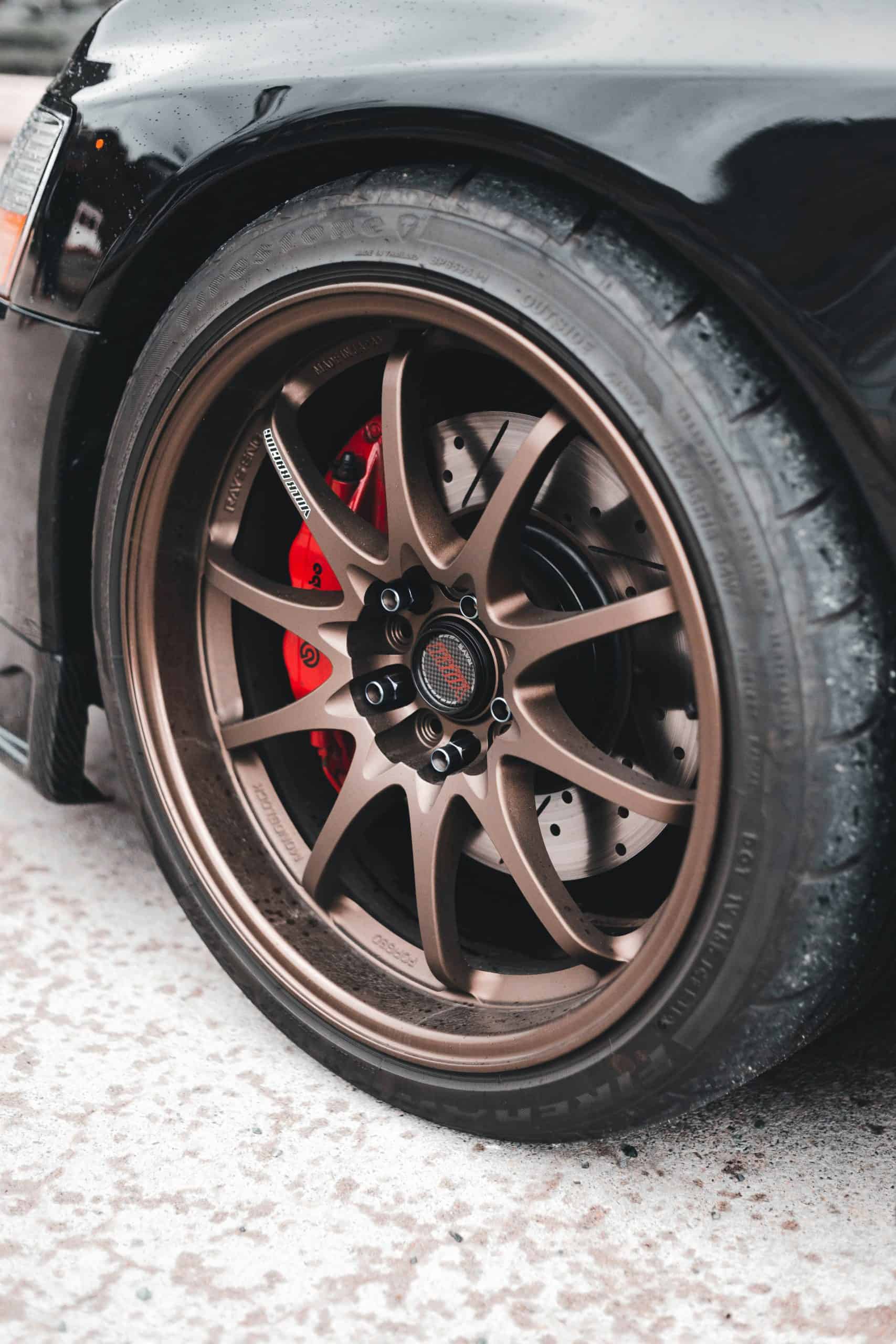
We fuse our finishes in high-heat ovens to create a rock-hard shield against road salt.
Precision True
Every wheel is checked for runout to ensure your ride stays vibration-free and smooth.
Custom Looks
From OEM silver to matte black or custom pearls, we build the look you want.
Corrode Guard
Our multi-stage coating process seals out moisture to prevent future alloy pitting.
It looked great
for 6 months.
Then it started
peeling off.
A finish that peels or fades usually comes down to prep. If coating goes over old paint or bare spots, it only bonds to the surface. We strip wheels to bare metal so the finish bonds directly to the alloy.
A finish holds
as long as what's
beneath it.
Most refinishing failures start with prep, not product. When the surface isn't ready, the finish is already compromised before the wheel leaves the shop.
Coating Over Old Paint
New coating bonds to old paint instead of bare alloy. That makes it only as strong as whatever's underneath. When old paint goes, the new finish goes with it.
Contaminated Surface Prep
Brake dust, grime, and oxidation build up over time. Coating over them seals the problem in rather than solving it, and the bond breaks from underneath.
Inconsistent Finish Across the Set
4 wheels without a consistent process produce 4 slightly different results. In direct light, one reads warmer, another darker. Subtle, but permanent.
Curb Rash Painted Over
Paint hides curb rash temporarily. The texture telegraphs through the finish, edges chip faster, and the repair fails sooner than a wheel that was properly addressed first.
No Final Inspection Standard
Without a quality check before release, thin spots and edge gaps leave the shop with the wheel. They show up clearly once it's on the car and in sunlight.
Wrong Finish for the Application
Wheels take road debris, heat cycles, brake dust, and chemical exposure every day. A finish built for body panels won't hold up here without the right formulation.
4 wheels.
1 finish.
Built to outlast the road.
When the prep is right and the finish bonds to bare alloy, what you get isn't just a good-looking wheel on pickup day. It's a finish that holds up to the road, the weather, and the brake dust that comes with daily driving.
Holds
Across All 4
Bond
Before Delivery
Wheel Damage Evaluator
Refinish or Replace?
Find Out Now.
5 quick questions about your wheels. Get an honest assessment of whether refinishing is the right call — or whether replacement makes more sense.
Question 01 / 05
What type of damage are you dealing with?
Surface damage is almost always refinishable. Structural damage is a different conversation.
Question 02 / 05
How many wheels are affected?
When refinishing multiple wheels, we process all of them through the same strip and coat cycle so the finish is consistent across the set.
Question 03 / 05
Is the wheel still holding air properly?
A wheel that won't hold air or loses pressure consistently may have a crack or porosity issue that makes refinishing unsafe.
Question 04 / 05
What is the current finish on the wheels?
Chrome and previously refinished wheels require additional prep. We strip to bare alloy regardless — but the process differs by starting point.
Question 05 / 05
What's your goal with the refinish?
Whether you're restoring to stock or changing the look, we work to the same standard — stripped to bare alloy, consistent across all wheels.
—
—
Our Process — Every Wheel
Stripped to bare alloy. Every wheel goes down to bare metal regardless of what's on it. Bonding to an existing finish is how coatings peel within months. We don't do that.
Consistent process across all wheels. Every wheel in the set goes through the same cycle at the same time. The finish matches because the process is identical — not because we eyeball it.
Final inspection before return. We check for consistency, coverage, and any finish defects before your wheels go back on the vehicle. If something's off, it gets fixed before it leaves the shop.
What you need
to know about
wheel refinishing.
The questions we get most from people who've had a finish fail before — or who want to get it right the first time.
Ready to Proceed
Stripped.
Coated.
Built to Last.